
| Care Home Catering Supplies: A Practical Guide for Care Home Kitchens |
A care home kitchen is unlike any other. You’re cooking for the same people every day, often three meals plus snacks, with a mix of dietary needs, textures and preferences on every service. Mealtimes are one of the moments residents look forward to most, and they’re one of the things inspectors and families notice first.
Getting your care home catering supplies right makes all of that easier. Here’s what to look for in a supplier, the standards your menus need to meet, and how to keep cost and waste under control.
What care home kitchens need from a food supplier
After decades supplying care homes across the North West, we hear the same five priorities from cooks and managers:
- Catering pack sizes. Packs that suit a care home kitchen mean less re-ordering, less waste and less storage juggling.
- Consistency. The same product, the same quality, every week. Residents notice when a favourite pudding changes.
- One delivery. Chilled, ambient and frozen together on a single scheduled drop, not three vans on three days.
- Product information on hand. Ingredients and allergen data you can check before a line goes on the menu.
- A person to call. A rep and a telesales team who know your kitchen and can sort a short delivery or a substitute fast.
Meeting CQC nutrition and hydration requirements
In England, care homes must meet Regulation 14 of the Health and Social Care Act 2008 (Regulated Activities) Regulations 2014: meeting nutritional and hydration needs. In practice, that means:
- Enough to eat and drink throughout the day, including between meals.
- Choice that reflects each resident’s preferences, as well as their cultural and religious needs.
- Food that meets medical needs, including texture-modified and fortified diets where a resident’s care plan calls for them.
- Support to eat and drink, and monitoring where someone is at risk of malnutrition or dehydration.
Your supplier can’t write your care plans, but the right range makes them much easier to deliver.
Food fortification in the care home kitchen
For residents at risk of weight loss, a “food first” approach adds energy and protein to everyday dishes without increasing portion size. Kitchen staples like full-fat dairy, butter, cream, cheese and milk powder do much of the work. A spoon of grated cheese in mash, cream in soup, or milk powder in porridge all count. Stocking these in catering packs keeps fortification routine rather than an extra job.
Hydration beyond the tea round
No-added-sugar squashes, juices, soups, jellies, ice cream and fruit in juice all contribute to fluid intake. Building them into the snack round, not just mealtimes, helps residents who struggle to finish a full drink.
Texture-modified diets and IDDSI
Many care home residents live with dysphagia (swallowing difficulties). Texture-modified food and thickened drinks are described using the IDDSI framework, a continuum of eight levels from 0 to 7. Each level has a number, a name, a colour and a simple test you can do with a fork or spoon.
Three things matter most for catering teams:
- Follow the speech and language therapist’s recommendation for each resident, and make sure the kitchen has a copy.
- Test every batch against the IDDSI method for that level. Don’t rely on how it looks.
- Make food look like food. Piped, moulded and plated with care, a texture-modified meal should still be recognisable as the dish everyone else is eating. It matters for dignity and appetite.
If you buy in pre-prepared texture-modified meals or thickeners, talk to your rep about what we can supply alongside your core range.
Menus residents recognise
Familiar food drives appetite. The dishes residents grew up with are often the ones that get eaten: a Sunday roast, steak and kidney pudding, fish pie, bangers and mash, jam roly-poly with custard.
Our care home range is built around those classics, including roasting joints, Yorkshire puddings, frozen vegetables, puddings and custard. For a proper bangers and mash, our own Kennedy’s Sausages come from our in-house butchery, a Britain’s Best Sausage finalist.
Cutting food waste and cost in a care home kitchen
Care home food budgets are tight, and waste is the easiest cost to cut. A few habits make a real difference:
- Frozen vegetables come prepped, keep for months and portion out exactly. There’s no peeling waste and no wilted veg at the back of the fridge.
- Per-kg joints cut and weighed fresh at time of order mean you pay for the weight you need, not a standard size that’s too big for your numbers.
- Fixed-count packs make it easy to cost a portion and plan a menu cycle.
- One delivery cuts the admin of chasing three suppliers and checking three invoices.
Our care home core range
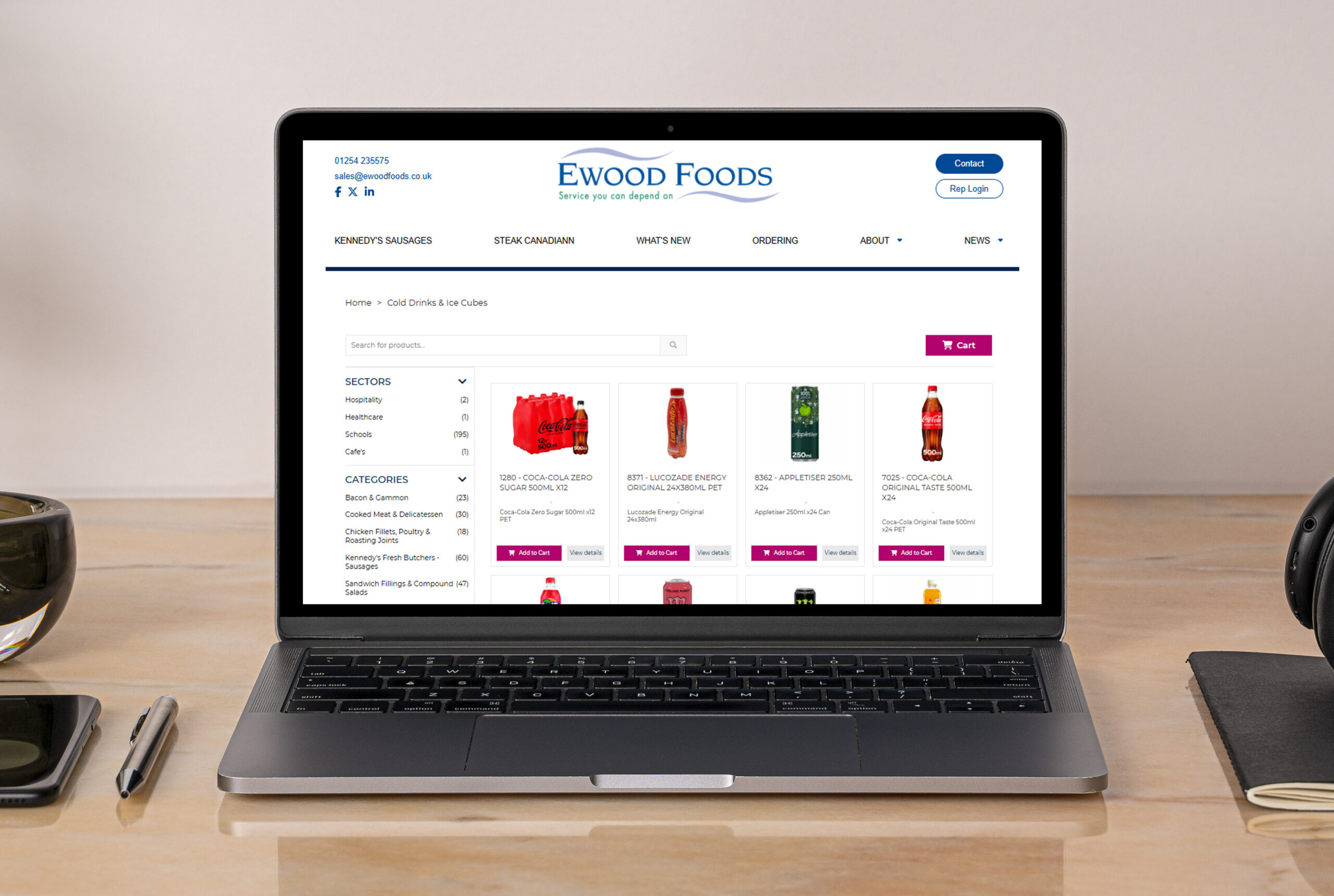
These are the categories we supply into care homes week in, week out. Browse every line, with codes, pack sizes and specs, in the online product guide using the Healthcare filter.
| Category | What’s in it | Storage |
| Dairy & chilled | Yoghurts, spreads, cheddar, grated cheese | Chilled |
| Chilled joints | Gammon, beef roasting joints, turkey | Chilled |
| Sliced meats | Chicken, ham, beef, corned beef | Chilled |
| Meats | Sausages, bacon, mince, diced chicken and steak | Chilled and frozen |
| Store cupboard | Beans, tomatoes, soups, NAS squash, jams, fruit in juice, custard, tea and coffee | Ambient |
| Frozen vegetables | Peas, carrots, broccoli, cauliflower, mixed veg, casserole mix | Frozen |
| Desserts & sides | Gateaux, sponge puddings, ice cream, Yorkshire puddings, fish pie mix | Frozen |
Not listed? This is a core range, not the full catalogue. If your kitchen buys it, there’s a good chance we stock it.
Frequently asked questions
What food do care homes have to provide?
Care homes must provide enough food and drink to meet each resident’s nutritional and hydration needs, with choice that reflects their preferences and any cultural, religious or medical requirements. In England this falls under CQC Regulation 14.
Do you supply nursing homes as well as residential care homes?
Yes. We supply residential and nursing homes, supported living and day care settings across the North West.
How do I order?
Find the product code and pack size in our product guide, then call telesales on 01254 235575, email sales@ewoodfoods.co.uk, or pass it to your rep.
Can I get allergen information for products?
Yes. Allergen information is on each product page in the online guide. Always check the pack label on delivery too, as manufacturers can change recipes.
Talk to us about your care home kitchen
Catering pack sizes. Dependable quality. One delivery.
Call 01254 235575, email sales@ewoodfoods.co.uk, or browse the care home range →
Ewood Foods — Service you can depend on.